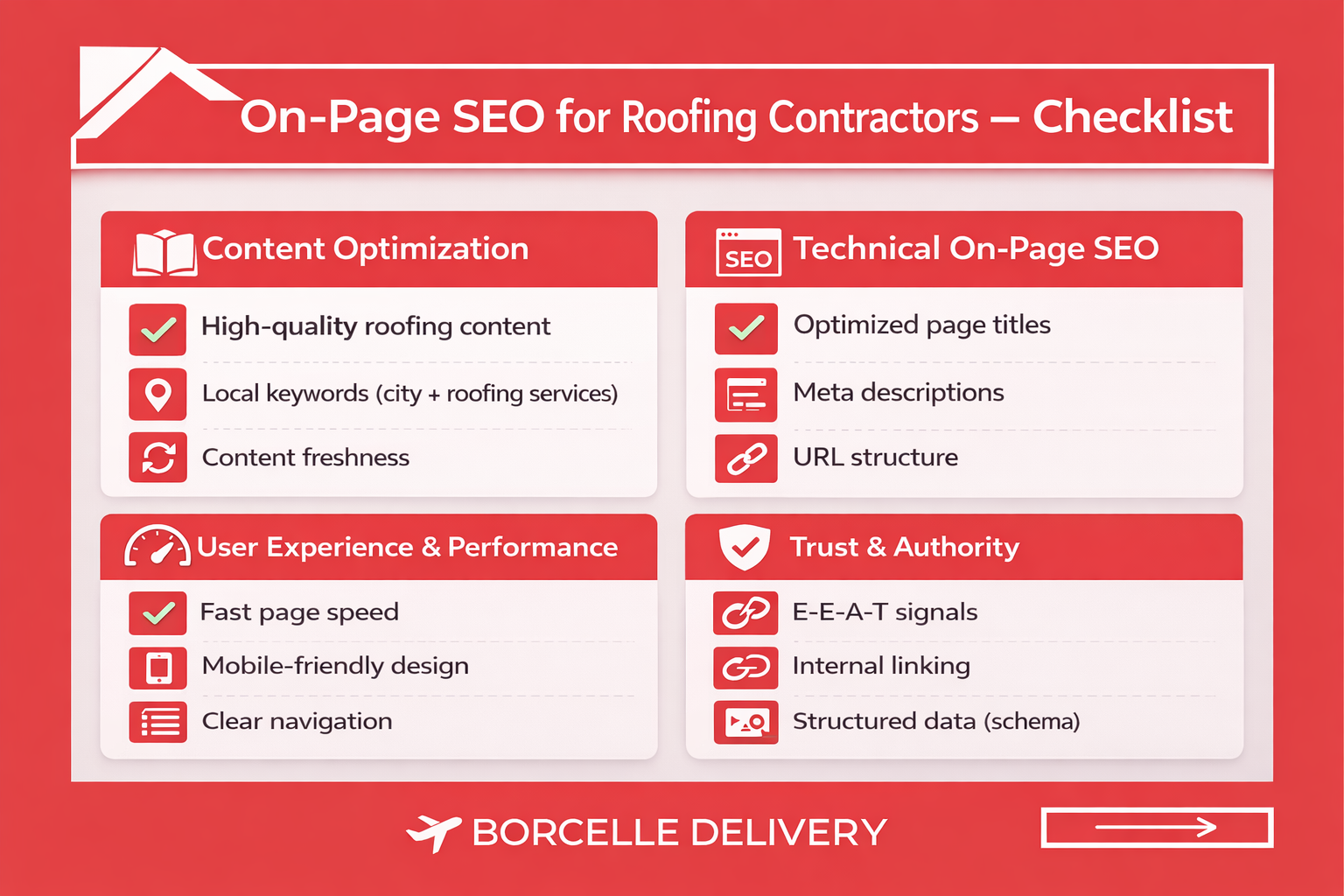
SEO On-Page Checklist for Roofing Contractors
Your roofing website might look professional, but without search engine optimization, your business might as well be invisible to people searching for your services. Roofing contractor search engine optimization-guided by a proven SEO on page checklist, is the difference between a website that generates dozens of high-quality leads every month and one that stays idle while competitors capture your customers.
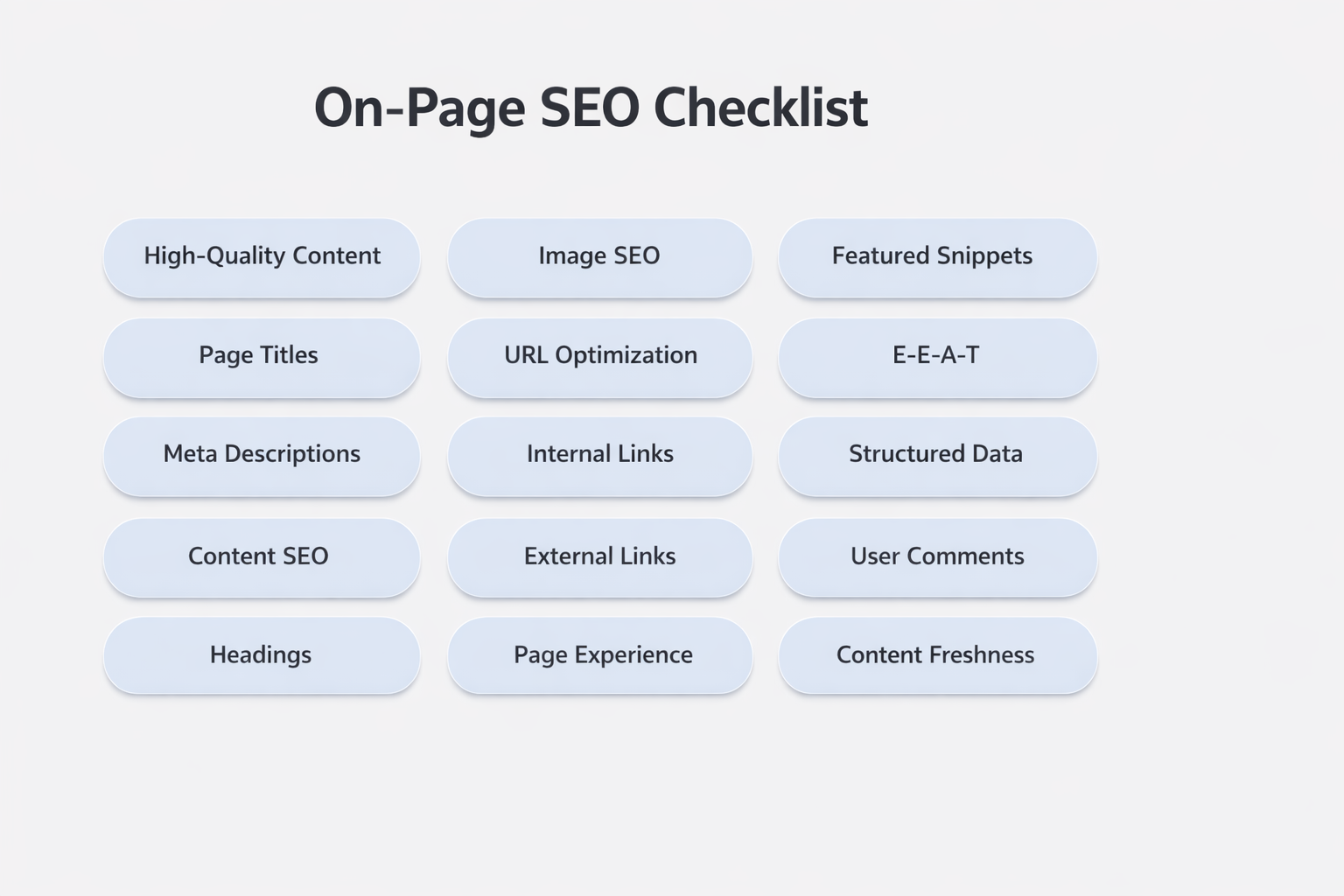
The ultimate on-page SEO checklist will take you through each crucial aspect that defines whether your roofing website will rank or simply vanish within Google’s depths. Using these best practices will allow you to witness a dramatic change in the flow of your organic traffic, lead generation, and booking rate.
The brutal truth is that 75% of searchers will never view beyond the first page of Google’s results. If your roofing company is not holding a position on the first page in response to searches such as “roof repair *your city*” or “emergency roofing services” in your region, you are literally leaving a fortune on the table. The good news is that on-page SEO is entirely in your control.
Craft Title Tags and Meta Descriptions That Drive Clicks
The title that shows up in search engines is your title tag; more often than not, it’s what makes the difference between your result and your competitor’s result on search result pages.
Optimize Title Tags for Maximum Impact
There should be a distinct title tag for each and every webpage on your roofing site. Title tags of both the homepage and service pages on a roofing site should follow this pattern: Homepage: “Expert Roofing Contractor in [City] | [Company Name].” Service Pages: “[Service] in [Location] | [Company Name].”
Use a title of 60 characters or less to prevent it from truncating when displayed in search engines. Add your target keyword to your title naturally to begin your title where it has more value. An effective title for your service page title can look like this: "Roof Replacement Dallas | Licensed & Insured Roofers."
General pages should not be named “Services” or “About Us” because these pages are missed opportunities to improve SEO and describe what the searcher is looking for.
Write Meta Descriptions That Convert
The meta description is the short summary shown below your title in search results, and when optimized using an on-page SEO audit checklist for attorney sites, it can significantly improve click-through rates, even though it doesn’t directly impact rankings.
Create an engaging description of 150 to 160 characters that contains your main and secondary keywords. Point out what sets you apart from your competitors: “20+ years trusted by Dallas homeowners. Free estimates, lifetime warranties, emergency roof repair services. Call us today for immediate roof services.”
Provide an obvious benefit or call to action that gives the searcher a reason to click on your listing over the other nine on the page.
Structure Content With Strategic Heading Tags
Well-structured headings make content easy to scan for readers, as well as for search engines to understand content topics.
Use H1 Tags Correctly
Each page requires one H1 tag that places your target keyword on it. This is your page heading that informs both your visitors and search engines what your webpage is all about.
For the roof repair services page, your H1 tag can be "Professional Roof Repair Services in [City]." For the location page, it can be "Trustful Roofing Contractor Serving [Neighborhood]."
Avoid ever repeating H1 tags on multiple pages-they should all be distinct.
Organize With H2 and H3 Tags
Organize the text with H2s for major section heads and H3s for sub-heads. Integrate secondary keywords and long-tails organically:
- H2: "Emergency Roof Repair Available 24/7
- H3: “Storm Damage Roof Restoration”
- H3: “Leak Detection and Repair”
This structure assists Google in comprehending the scope with regard to the content you provide. This structure also enables visitors to locate specific information effectively. This structure also assists you in managing various types of content.
Build SEO-Friendly URL Structures
Descriptive URLs result in enhanced usability and also possess good keyword information value for search engines.
Create Clear, Keyword-Rich URLs
Rather than something like "Yoursite.com/page?id=7854," you might want to consider something like "Yoursite
Best practices for roofing contractor URLs:
- Keep them short and readable
- Include primary keywords without stuffing
- Use hyphens to separate words
- Avoid numbers, dates, and special characters
- Match the URL structure to your site hierarchy
A well-organized URL structure might look like:
- yoursite.com/services/residential-roofing
- yoursite.com/service-areas/downtown-chicago
- yoursite.com/blog/signs-roof-needs-replacement
This makes it easier both for the search engines to index your pages and for users to understand their current position in relation to your site.
Dominate Local Search With Location Optimization
In roofing company SEO, local search engine optimization is absolutely essential as people search in particular locations.
Embed Location Keywords Naturally
Incorporate your target cities and neighborhoods throughout your content, especially in:
- Page titles and H1 tags
- First paragraph of body content
- Service descriptions
- Image alt text
- Meta descriptions
But avoid awkward keyword stuffing. INSTEAD "We provide Dallas roof repair in Dallas for Dallas homeowners," medicatedly write, "Our licensed team has served Dallas homeowners for over 15 years, specializing in both emergency repairs and complete roof replacements."
Create Dedicated Service Area Pages
Create individualized pages for major cities or regions you cover as a business. Such pages should contain:
- Specific landmarks and neighborhoods
- Local testimonials and project photos
- Community involvement or local partnerships
- Embedded Google Map showing the service area
- Links to relevant service pages
These location pages can give your search engine optimization efforts a huge boost in terms of showing up in Google's Local Pack, the group of three businesses listed at the top of the page on Google, accompanied by a Google Map.
Write Content That Matches Search Intent
The best on-page SEO for roofing websites starts with knowing what information people actually want when they search.
Answer Customer Questions Directly
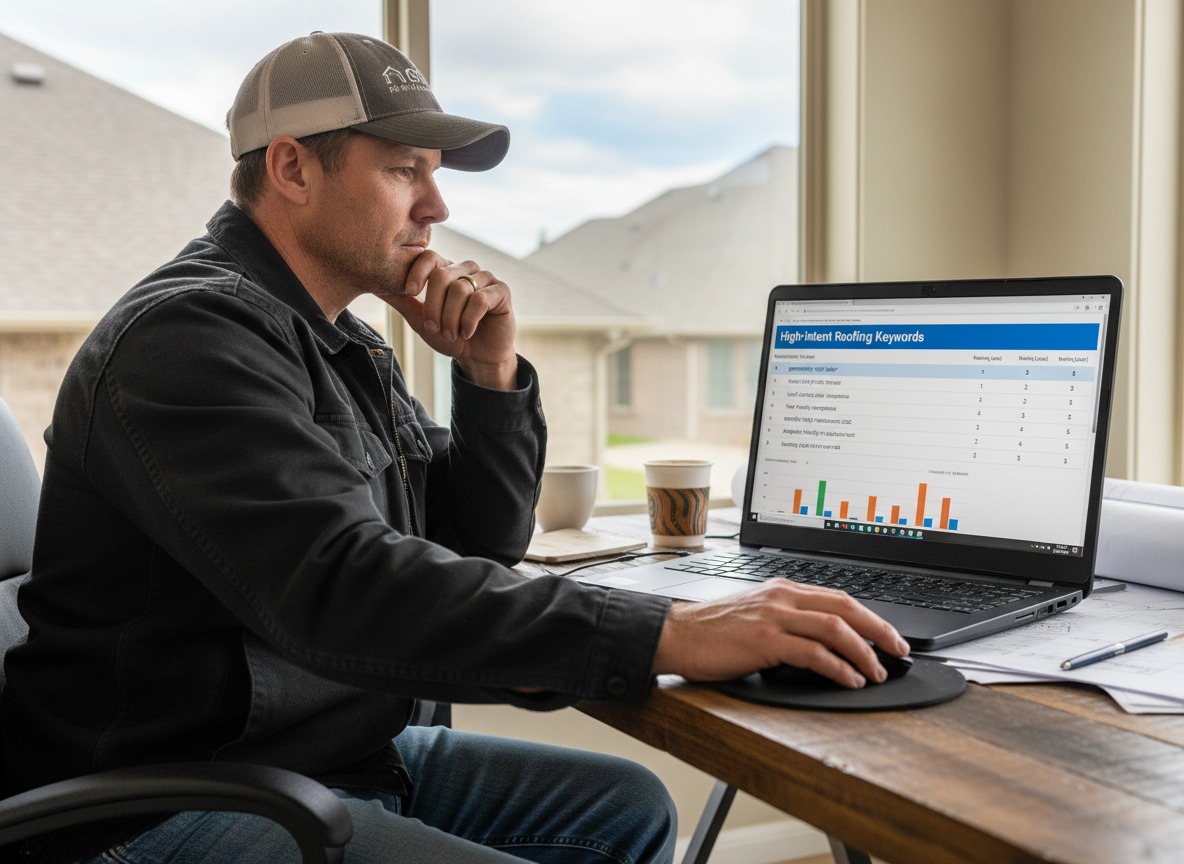
Research what questions your customers ask most frequently. Common roofing searches include:
- "How much does roof replacement cost in [city]?"
- "Signs I need a new roof"
- "Emergency roof repair near me"
- "Best roofing materials for [climate]"
Directly address these questions by providing broad, detailed information in your content. Don't beat around the bush-provide the answer people are looking for directly then elaborate on it.
Use Natural Language and Conversational Tone
Speak to a homeowner, not a search engine, and use natural language where key words are placed where they belong and not every other sentence.
Rather than: "Our roof repair roof replacement roofing services in Dallas provide quality roofing"
Write: “We offer a range of roofing services to Dallas homeowners: emergency roof repair, roof replacement, and roof inspection."
Search engines can think like humans about context and meanings by focusing on producing highly valued content.
Optimize Images for Speed and Searchability
While images make your work look great and help establish credibility with your prospective clients, they have to be optimized right if they are to serve a useful purpose for SEO.
Rename Image Files With Descriptive Keywords
Before uploading any image, rename it with a clear descriptive name rich in keywords. Instead of "IMG_8457.jpg", name it "asphalt-shingle-roof-replacement-dallas.jpg" or "storm-damage-roof-repair-before.jpg." That simple step helps search engines know what's in the image and aids in image search result rankings.
Write Detailed Alt Text
Alt text serves two purposes: it helps visually impaired users understand images through screen readers, and it tells search engines what the image depicts.
The purpose of alt text is twofold: it allows visually impaired users to understand through screen readers what the images are, and it tells the search engines what the image is depicting.
- Write alt text that is descriptive with the keywords included:
- "Roofing contractor installing new asphalt shingles on residential home in Austin"
- Before-and-after comparison of hail-damaged roof repair in Dallas neighborhood
- Emergency roof leak repair crew arrives at the customer's home during a storm.
- Keep alt text less than 125 characters and actually descriptive.
Compress Images for Faster Loading
Large picture files will cause your website to load very slowly. Use tools to compress your files by 50-70% to maintain quality.
Services such as TinyPNG or ImageOptim can automatically optimize images while uploading images using WordPress services. Uploading images already optimized will result in fast loading time.
Build Strategic Internal Links
Internal linking, or the connection of pages on your website to each other, will distribute authority throughout your site and help visitors find related information.
Link Service Pages to Related Content
From your main service pages, link to:
- Blog posts that describe the service in detail
- Frequently asked questions pages to answer common questions.
- Location pages showing where you provide that service
- Testimonials from customers who used that service
From blog posts, link to relevant service pages. If you mention roof inspections on a blog about storm damage, link those words to your inspection service page.
Use Descriptive Anchor Text
Avoid using click here or read more. Make your anchor text more specific by using keyword-rich anchor text that exactly identifies where the user is headed:
- “Learn more about our roof replacement process”
- "See pricing for Emergency Roof Repair"
- “Read customer reviews of our inspection services”
This ensures that both the user as well as the search engines have a clear understanding regarding the relevance of the pages that are being cross-referenced.
Prioritize Page Speed and Mobile Performance
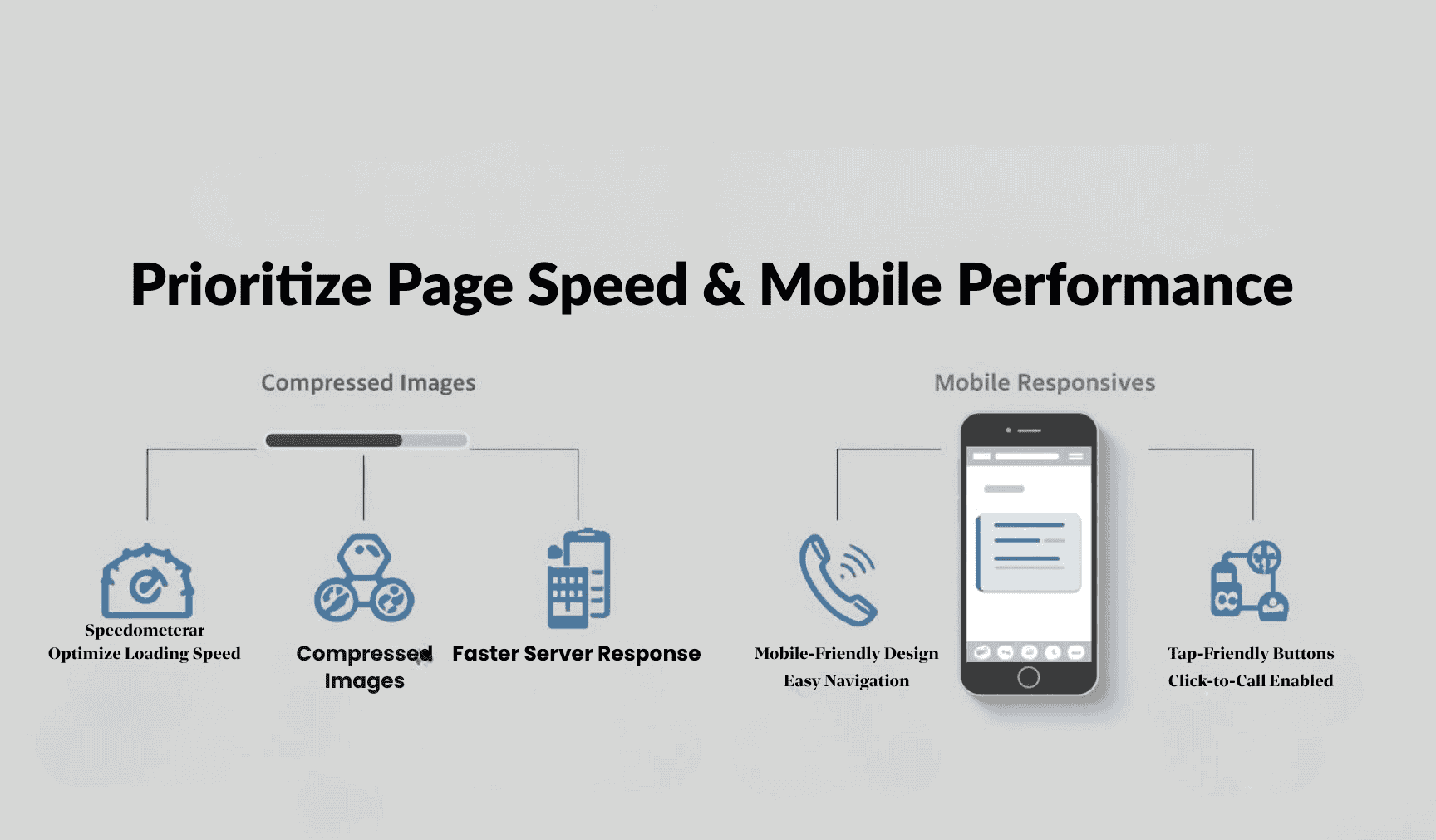
“A site that is either slow or difficult to navigate on mobile can be the death of conversions and search rankings no matter how optimized the rest of the site may be.”
Optimize Loading Speed
The performance issues are detected using Google PageSpeed Insights. The issues include:
- Uncompressed Images
- Render-Blocking JavaScript
- Slow server response time
- Too many plugins or scripts
Such problems should be tackled in a structured manner. Small optimizations in loading time can lead to a dramatic increase in engagement as well as ranking in search engines.
Ensure Mobile Responsiveness
More than 60% of local searches occur on mobile devices. Your site needs to be perfectly viewable on a smartphone and/or tablet.
Use a responsive design that will adapt to the screen size. Try your site on other devices in order to test that:
- The text is easy to read without zooming
- The buttons are of a size large enough to be easily tapped
- Navigation menus are functioning well
- Forms are very easy to fill out on mobile
- Click-to-call numbers function correctly
Google prioritizes mobile-friendly sites in search results, making this non-negotiable for roofing contractor SEO.
Implement Schema Markup for Rich Results
Schema markup is code that helps search engines understand your content better, potentially earning you enhanced search listings.
Add Local Business Schema
Include structured data that specifies:
- Your business name, address, and phone number
- Service areas
- Operating hours
- Services offered
- Customer ratings and reviews
This information can appear directly in search results, making your listing stand out and improving click-through rates.
Use Service and Review Schema
Indicate the individual service offerings and customer reviews on your website so that Google can display the ratings and prices directly on its search result pages.
These are referred to as rich snippets and have made listings more attractive and trustworthy than mere text results.
Monitor and Improve Continuously
On-page SEO for roofing companies isn't a one-time task-it requires ongoing monitoring and refinement.
Track Key Metrics
Use Google Analytics and Google Search Console to monitor:
- Organic traffic growth to each page
- Keyword rankings for target terms
- Click-through rates from search results
- Time on page and bounce rates
- Conversion rates from organic traffic
Make Data-Driven Updates
Review performance monthly. When pages underperform:
- Update content with more detailed information
- Improve title tags and meta descriptions
- Add more relevant internal links
- Refresh images and optimize them better
- Strengthen keyword optimization
Continuous improvement keeps your site competitive as search algorithms evolve and competitors try to outrank you.
Start Ranking Higher Today
A good online SEO, or search engine optimization, checklist will transform a roofing website into a powerful lead generator, not just a brochure-style website. The secret to successful roofing contractors' websites lies in their on-page optimization, useful content, and constant improvement.
Here at Roofline Authority, we assist roofing contractors in leveraging effective SEO strategies to increase their online presence and lead generation.
Ready to stop losing customers to competitors who rank higher? Contact Roofline Authority now for a free comprehensive SEO audit. We'll analyze your website's on-page optimization, identify critical issues, and provide a detailed roadmap to dominating your local market.
Get Your Free SEO Audit Today and discover the specific changes that will drive more traffic, leads, and revenue to your roofing business.



.png)
.png)